;'%3e%3c/rect%3e%3cpath%20d='M180.624%20242.45C180.624%20278.976%20210.818%20298.437%20232.915%20315.862C240.711%20322.006%20248.222%20327.797%20255.733%20327.797C263.244%20327.797%20270.755%20322.013%20278.551%20315.854C300.656%20298.444%20330.842%20278.976%20330.842%20242.458C330.842%20205.932%20289.532%20180.027%20255.733%20215.148C221.934%20180.019%20180.624%20205.924%20180.624%20242.45Z'%20fill='white'%20data-darkreader-inline-fill=''%20style='--darkreader-inline-fill:%20var(--darkreader-background-ffffff,%20%23181a1b);'%3e%3c/path%3e%3cpath%20d='M301.162%2099.217C310.088%20101.796%20314.21%20111.561%20310.929%20119.992C307.611%20128.517%20298.121%20132.484%20289.546%20130.188C264.168%20123.394%20237.204%20124.416%20212.245%20133.303C182.788%20143.791%20158.092%20164.535%20142.676%20191.74C127.261%20218.944%20122.156%20250.79%20128.296%20281.449C134.436%20312.109%20151.411%20339.533%20176.114%20358.703C200.816%20377.874%20231.596%20387.508%20262.82%20385.845C294.044%20384.181%20323.625%20371.33%20346.151%20349.644C368.677%20327.957%20382.641%20298.885%20385.489%20267.747C387.901%20241.363%20382.195%20214.989%20369.314%20192.092C364.961%20184.355%20366.448%20174.177%20373.883%20168.847C381.235%20163.576%20391.718%20165.144%20396.432%20173.151C413.703%20202.482%20421.427%20236.607%20418.306%20270.747C414.737%20309.771%20397.237%20346.206%20369.006%20373.384C340.776%20400.562%20303.704%20416.667%20264.573%20418.752C225.442%20420.837%20186.868%20408.762%20155.91%20384.738C124.952%20360.713%20103.679%20326.344%2095.9839%20287.921C88.289%20249.497%2094.687%20209.587%20114.006%20175.493C133.325%20141.4%20164.274%20115.403%20201.19%20102.258C233.487%2090.7587%20268.461%2089.7689%20301.162%2099.217Z'%20fill='white'%20stroke='white'%20stroke-width='4'%20data-darkreader-inline-fill=''%20data-darkreader-inline-stroke=''%20style='--darkreader-inline-fill:%20var(--darkreader-background-ffffff,%20%23181a1b);%20--darkreader-inline-stroke:%20var(--darkreader-text-ffffff,%20%23e8e6e3);'%3e%3c/path%3e%3cpath%20d='M255.603%20138.079L299.636%20119.996C300.274%20119.558%20300.819%20118.997%20301.239%20118.346C301.66%20117.695%20301.948%20116.966%20302.087%20116.2C302.226%20115.435%20302.213%20114.649%20302.048%20113.886C301.884%20113.123%20301.572%20112.399%20301.13%20111.755L263.288%2082.5259'%20stroke='white'%20stroke-width='50'%20stroke-linecap='round'%20stroke-linejoin='round'%20data-darkreader-inline-stroke=''%20style='--darkreader-inline-stroke:%20var(--darkreader-text-ffffff,%20%23e8e6e3);'%3e%3c/path%3e%3c/svg%3e%3cstyle%3e@media%20(prefers-color-scheme:%20light)%20{%20:root%20{%20filter:%20none;%20}%20}%20@media%20(prefers-color-scheme:%20dark)%20{%20:root%20{%20filter:%20none;%20}%20}%20%3c/style%3e%3c/svg%3e)
Natural methods for fertility tracking
Natural methods cover several ways of observing your body's signals — temperature, cervical mucus, cervix — to identify your fertile and infertile phases, without hormones or devices. It isn't a single method, but a family of methods: each has its own rules, its own level of rigour, and its own history.
Here are the four most recognised methods — the very ones Happy Fertility helps you track every day.
Method based on cervical mucus
A single sign to observe: cervical mucus. Simple to get started with, it mostly asks for consistency in daily observation.
Discover the method based on cervical mucus →
Fertility Care™
A standardised way of charting mucus observations, supported by certified instructors — often chosen for its rigorous framework and its link to medical fertility follow-up.
The sympto-thermal method
It cross-checks several signs — temperature and mucus, sometimes the cervix — to confirm the fertile window through multiple indicators rather than a single one.
Discover the sympto-thermal method →
Sensiplan
The German sympto-thermal method, one of the most studied and most codified, with precise rules for determining the start and end of the fertile period.
The I2F Chart
A daily log inspired by the methods taught by the Institut de Formation à la Fertilité (I2F), viewing ovulation as a marker of overall health.
Which one should you choose?
There's no universally "best" method: the right choice depends on how much time you can put into learning it, how comfortable you are with a given cycle sign, and how much support you're looking for. They all share one thing: their reliability depends directly on how consistently and carefully you observe.
Still weighing natural methods against other tracking options? Our natural methods: for and against page answers the most common objections.
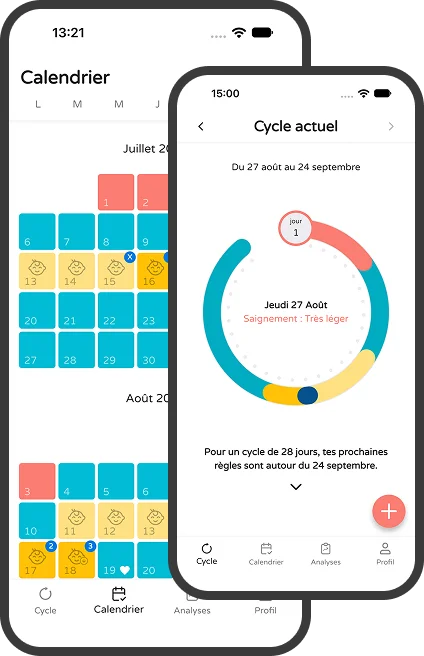
Whichever method suits you, Happy Fertility helps you log your observations in a few seconds a day and share your calendar with your partner.